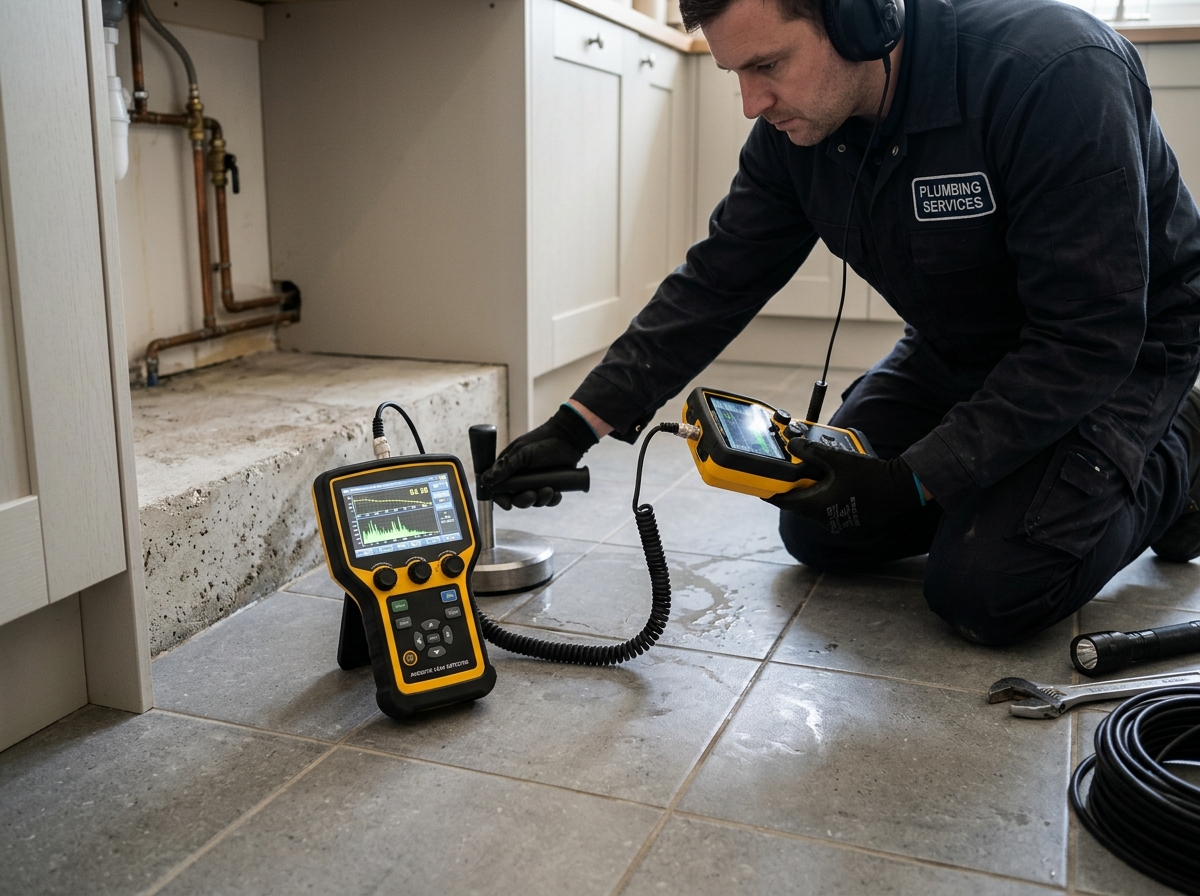
Precision Leak Under Slab Detection in Enid
When moisture appears unexpectedly on your floor or your water bill surges without explanation, guessing where the leak originates can cause costly property damage. Our network provides non-invasive slab leak detection Enid homeowners rely on to pinpoint pipe failures beneath concrete slabs with pinpoint accuracy.
Enid homes constructed from the 1960s through the 1990s predominantly feature copper water lines buried underneath concrete foundations. In Garfield County, shifts in expansive red clay soils apply uneven pressure to these buried lines. Over time, friction against sub-base rock or gravel wears down the copper wall, leading to pinhole leaks. Through modern electronic leak detection Enid plumbing specialists identify the exact acoustic signature of escaping water without jackhammering your floors on a hunch.
Warning Signs That Require a Slab Leak Test
Before calling for diagnostic testing, property owners often notice subtle symptoms that point toward an under-slab failure. Conducting an initial slab leak test Enid homeowners can verify themselves begins with checking the municipal water meter:
- The Water Meter Dial Test: Ensure all water-using appliances, faucets, and irrigation systems are turned off completely. Locate your water meter box near the curb. If the low-flow indicator triangle or digital dial continues to advance, pressurized water is escaping somewhere in the system.
- Localized Warm Floor Areas: If you step on a section of tile, carpet, or hardwood that feels noticeably warmer than surrounding areas, you likely have a hot water slab leak directly beneath that spot.
- Sound of Running Water in Quiet Rooms: Hearing a steady hiss or rush of water near bathroom or hallway walls when no fixtures are operating.
- Damp Baseboards or Flooring Seams: Darkening grout lines, cupping wood planks, or damp carpet padding indicating moisture wicking upward through concrete micropores.
Schedule Precision Electronic Leak Locating in Enid
Do not allow an undetected water leak to soften foundation soils or damage finished flooring. Call our dedicated line to speak with a diagnostic leak specialist.
Call (888) 205-7875 to Book DetectionHow Technicians Isolate Hot vs. Cold Lines
A structured diagnostic process is critical to isolating the leak before deployment of listening devices. First, the technician shuts off the cold water shutoff valve leading directly into your water heater tank. If the water meter stops moving once the water heater is isolated, the leak is confirmed on the hot water distribution side. If the meter continues to spin, the leak is located on the main cold water supply network.
Once the line is identified, technicians perform hydrostatic pressure testing by capping sections of pipe and pressurizing them with air or inert gas. Monitoring pressure loss confirms the integrity of individual branches serving bathrooms, kitchens, and utility rooms.
Acoustic, Electronic, and Thermal Locating Technology
Locating a pressurized pipe leak beneath 4 to 6 inches of concrete and flooring requires three complementary technologies:
- Acoustic Listening & Digital Ground Microphones: Escaping pressurized water creates a distinct acoustic frequency as it sprays through a pinhole into soil and concrete. Digital ground microphones filter out ambient environmental noises, allowing the operator to follow sound decibel increases directly to the leak source.
- Infrared Thermal Imaging: For hot water slab leaks, thermal cameras scan the foundation surface, revealing real-time heat maps that outline hot water line pathways and pinpoint the thermal bloom created by pooling warm water.
- Electromagnetic Pipe Line Tracing: Technicians connect a low-frequency radio transmitter to the plumbing manifold, using a handheld receiver to trace the precise layout and depth of the copper pipe beneath the floor.
Why Accurate Location Minimizes Foundation Impact
Without precision electronic locating, plumbers in past decades had to guess where leaks were based on surface moisture, sometimes breaking multiple sections of concrete slab before finding the pipe failure. Precision detection confines any required excavation to a small, targeted square, preserving the structural integrity of your foundation and reducing flooring restoration expenses.
In many instances, once the location is verified, homeowners choose a non-invasive slab leak reroute overhead through the attic rather than opening the concrete floor at all. To learn more about full-service solutions, review our comprehensive guide to slab leak repair in Enid.
What the Written Diagnostic Report Includes
Upon completing the inspection, the technician delivers a detailed written report outlining the findings. This comprehensive documentation includes:
- Pressure testing data confirming line loss on hot or cold circuits.
- Exact schematic location and physical depth of the identified leak.
- Photographic evidence including thermal imaging captures and moisture meter readings.
- Recommended repair pathways (spot repair vs. overhead reroute).
This written leak report serves as essential proof for your insurance provider when coordinating slab leak insurance documentation for tear-out and water damage coverage.
Need an Accurate Slab Leak Inspection in Enid?
Our network connects you directly with equipped technicians serving Enid, Downtown Enid, and nearby Garfield County communities.
Call (888) 205-7875 Now